Sunday, June 18, 2017

Project Sharing and Reflection

This post will share my final exhibition on the project and reflect on the Genius Hour process as a whole in two parts-- project sharing and reflection. 


PROJECT SHARING

Visuals: 


The completed trifold

Title of the project

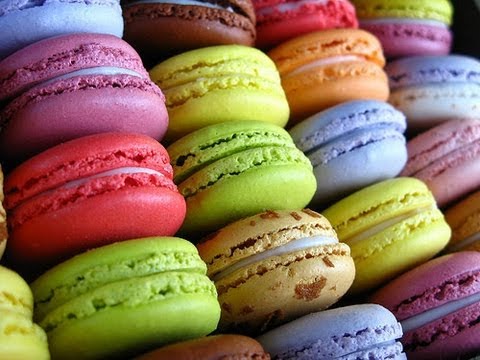
Presented macarons

3 interesting things I learned:
  • I learned how to fix my mistakes in each trial by researching and testing each variable.
  • I learned that when making anything (in this case macarons), you will get better results the more you practice.
  • I learned how to confidently present my work in front of peers.
3 challenges I faced:
  • Persevering through each baking trial with time and effort, sometimes more than I wanted to handle.
  • Cleaning the kitchen after each test. 
  • Finding the right method that made me more confident in trying over and over to get a successful bake, whether it was more research, a different approach, or even a different recipe. 

REFLECTION

     The Genius Hour experience for me was a great learning experience for myself as a person, student, and baker. There were highs and lows throughout the entirety of the project and I learned a lot about perseverance and overcoming any stereotypes and fears that came my way. My exhibit went a lot easier and stress-free than I had thought it would. I had expected a much bigger audience and a lot more formal presentation, but it turned out to be not as complicated. However, I had kind of procrastinated on the speech, so it wasn't as long as I would have liked and I had leftover time during each presentation. I saw that some students, when they had extra time, had a list of interesting facts or games to wrap up their presentation. Next time I would probably like to have a backup, or plan my speech a lot further in advance.
     Over the past six months, I was able to push myself in ways I wouldn't normally have. Leaving behind this project and my amazing Language Arts class will be slightly nostalgic for me but I am glad that I could have experienced what I did. Overall, the Genius Hour project was a lot of fun and not only tested my skills in the kitchen, classroom, and the real world, but helped improve them. 


Monday, June 5, 2017

Trial #4 LAST ONE!!


Recipe(s) used:
     Macaron: Rosanna Pansino
     Filling: Strawberry Buttercream
     Would I use it again?: Yes
What I changed: Changed nothing from previous trial.
Successes: Macarons were completely successful and looked, tasted, and baked as they should. 
Fails: Some macarons were unevenly piped.
What I would change: Be more precise when presenting the macarons at our expedition, try out different colors and flavors of macarons. 


Monday, May 15, 2017

Trial #3


Recipe(s) used:
     Macaron: Rosanna Pansino
     Filling: Regular Buttercream
     Would I use it again?: Yes
What I changed: Kept oven temperature at 300℉, after researching that higher temperatures will help prevent hollow cookies rather than lower. I also use parchment paper instead of silicon mats to help distribute heat more evenly.
Successes: Macarons looked more like they were supposed to. The rise was normal.
     Why: I did more research on hollow macarons. I think the broader my knowledge of the technique the more I will know what to fix.
Fails: Macarons were slightly overcooked. Also, some were slightly  hollow but not extremely.
     Why: I wasn't watching each batch close enough. I still have no idea why some were hollow, but I think it may have to do with the macoranage. (Folding of meringue and dry ingredients.)
What I would change: Do more research on macoranage to see if that is the cause of the problem.

Some macarons were more hollow than others. 

Thursday, May 11, 2017

Trial #2

Recipe(s) used:
     Macaron: Rosanna Pansino
     Filling: Honey butter custard https://www.youtube.com/watch?v=0JeTgZGt-p8
     Would I use it again?: Yes
What I changed: Lowered oven temperature from 300 to 280℉.
Successes: Macarons tasted better, looked better, and were more consistent in size.
     Why: I think the more practice I have the better results I will get each time, being more and more comfortable with the technique.
Fails: Macarons were STILL hollow.
     Why: The temperature still might have been too high.
What I would change: Lower temperature to 250℉?


Hollow- Rise was still too high.

TED Talks

This week we analyzed a few TED talks and reviewed characteristics of one to prepare for our own speeches we will have when presenting our Courage Project.


What are the five qualities of a great presenter?
  1. Confident
  2. Organized
  3. Authentic
  4. Generous
  5. Engaging

What are five quick tips?
  1. Let your passion show
  2. Make the audience laugh
  3. Optimize your slides
  4. Use powerful visuals
  5. Simplify your message

What are your strengths as a presenter?
My strengths are writing the speech beforehand because I am confident in writing well and thoroughly.

What do you think will be challenging when you do your TED Talk during the Exhibition?
I think that talking at the right speed and being confident in my presentation will be challenging for me.

What are you going to do to overcome these challenges?
To overcome these challenges I will probably have to rehearse my talk a lot to become comfortable in front of an actual audience. This way I can focus less on the words and more on connecting with the people I'm presenting to.

Monday, May 1, 2017

Trial #1


Recipe(s) used:
     Macaron: Rosanna Pansino
     Filling: Regular buttercream
     Would I use it again?: Yes
Successes: Macaron formed a skin before baking, rose and got feet in the oven. I was able to present a finished cookie.
     Why: I was more comfortable with the technique after more research and I used a recipe that I trusted.
Fails: Macarons were hollow, feet exploded, some were different sizes, different batches under cooked/under baked.
     Why: I think the macarons were hollow because the oven temperature was too high, causing them to cook too fast and the batter to explode through the feet.  I also could have been more precise with piping the cookies and baking times.
What I would change: Lowering oven temperature, keeping size and baking time consistent.
     How: Research more on hollow macarons and exercise more precision.


                                       Hollow cookies                       Feet rose too high        


Uneven sizes


Wednesday, April 26, 2017

Citations


My favorite website to use for citing sources is citation machine. I've been using it since elementary school and am comfortable navigating through the site. As part of the research component of our courage project, I am citing the three sources I used.


Thursday, April 6, 2017

Research

Image result for macarons 

Before starting to experiment, I'm starting by getting more familiar with the background history. Including: the history of, how-to's, and other facts.
Note: These are my personal notes from the sites Les Petits Macarons, Indulge with Mimi. and Sweet and Savory by Shinee.

What should I expect from a macaron?

The shell should be shiny with an outer crunch at the first bite. Texture should not be to soft so it dissolves into the filling, or too thick that only the crust is felt.

A proportional foot around the shell of the macaron: A foot is the small ruffled lining that circles each shell.

The interior of the cookie should be "soft, moist, and only slightly chewy." The whole macaron together should not taste too sweet.

History/facts

Catherine de' Medici brought macarons to France in 1533 after marrying Henry II.

"Macaron" originates from Italian "maccherone" or "macaroni". Macarons did not just refer to a cookie, but a savory dish as well. 

A French-English dictionary from 1673 refers to macarons as "'little Fritter-like Buns, or thick Losenges, compounded of Sugar, Almonds, Rosewater, and Musk, pounded together, and baked with gentle fire.'"

The macaron obviously became famous in France, where different cities evolved the popular dessert "into their own specialities." 

Recipes for French macarons began in the middle of the seventeenth century.

Macarons as we know it- two shells with a filling- became popular more recently from companies such as Ladurée.

*WHAT I KNOW*
1. Macarons are French cookies made of almond flour, icing sugar, egg whites, and sugar.
2. You whip the egg whites and sugar into a stiff meringue and combine it with the flour and icing sugar in a strict technique called macaronage: carefully folding both components until the right consistency.
3. Macaron batter should not be too runny or thick, about the consistency of a thicker pancake batter. It should be a piping consistency where it doesn't spread too much once piped.
4. You let macarons sit before baking until it dries and forms a skin (where you can touch the batter and nothing sticks).
5. In the oven, the macarons should bake at a low temperature to help the rise, drying out, and forming of the feet.
6. Once cooled, the macarons can be sandwiched with a filling (i.e. buttercream, jam, curd). 


Monday, April 3, 2017

Infographic Feedback

Related image

This week, we each received 2-3 pieces of feedback from our classmates on our visual infographics. Here's an overview of what my peers thought of my proposal:

"Your website looks very professional and I can tell you worked hard on your infographic. Some things you can work on are describing which ingredients you will need and where you will get them."

My response: The ingredients I will potentially need are almond flour, powdered sugar, gel food dye, egg whites, sugar, and flavorings as well as a filling (buttercream, jam, icing, etc.). I am planning on buying these ingredients at Target, Trader Joe's, Safeway, and/or amazon.com.

"I really like your idea and I think that it's very creative. One question I have is how this takes courage. Are you going to give some to a food bank? Do a bake sale and donate the earnings to charity? or something else?"

My response: I have tried many times in the past to make successful macarons- and failed. Since then I haven't really tried anything very ambitious, so I decided this courage project would take courage because I haven't had much of that to pursue this goal. Also, I'm not planning to donate any earnings to organizations. Learning this skill is more for my benefit in baking experience.

"I really love how you were really clear with what you hope to accomplish, and how you are going to get there. I also love how your visual is appropriate for the topic, and how it adds to your big idea. The only suggestion I have is that: maybe you could make your font bolder/larger, or easier to read. It wasn't that hard to read, but it was a little more effort-inducing."

My response: I tried to make the text a little clearer by downloading is as a jpeg and pdf. But my last and only resort that worked was taking a screenshot and pasting it onto the post.


Thursday, March 23, 2017

Wednesday, February 1, 2017

Aw C.R.A.P.


We've started thinking about the different sites/databases we will be using to research our Genius Hour idea, so we started reviewing the C.R.A.P. test. As inappropriate as it sounds for school research, the analogy is actually really helpful!

Currency- Is the info up to date?
Reliability- Is the info fair? Does it use references?
Authority- Is it peer reviewed? Does the author know what they are talking about?
Point of View- Fact or opinion? 

For two resources that I will use the C.R.A.P. test on, I will be looking for articles with information on the history of macarons. If I do my Genius Hour project on making macarons, knowing about their past might make it easier to learn. 

Resource #1: "Macaroon vs. Macaron: Two Very Different Cookies With A Linked Past"
(blog.foodnetwork.com)

C- Article written May 31, 2013
R- The information does not include references, but provides a links for other macaron recipes.
A- Written by the Online Entertainment Editor for FoodNetwork.com, Joseph Erdos.
P-  Has facts on the history of macaron making and their basic components, and opinions on why he likes macarons.

Resource #2: "Gluten Free and Delicious Since the 700's" by Anne E. McBride (www.lespetitsmacarons.com)

C- Article written 2011
R- The information does not include references.
A- The article isn't peer reviewed, but was written by the "Les Petits Macaron" cookbook author Anne E. McBride. She is also the co-author of three other culinary books, the taste director for the Worlds of Flavor® International Conference & Festival at the Culinary Institute of America, in line for a Ph.D. in food studies, and more. 
P- Has facts on the history of macaron making.

I think that Resource #2 is more reliable because even though the first article is trustworthy and written by a creditable author, the writer of the second resource has more experience in the field of making macarons. I also think I will be able to find more helpful information that I can trust to be accurate because I know the author is experienced. 

Tuesday, January 17, 2017

Databases VS Search Engines


An example of a database and search engine.


Last Thursday, our school librarian gave us a spiel on databases versus search engines. We needed to know when it is appropriate to use search engines (e.g. Google, Bing, Yahoo) and when to use online databases (e.g. Proquest,  Overdrive, ABCMouse) for research on our Genius Hour projects. We also learned how Wikipedia can help us without relying on it 100% of the time.


What's the difference?

Database: A database is an organized, unbiased, center of accurate information that has been professionally vetted (screened).

Search Engine: A search engine is an online program that pulls information at a time or request based on keywords.

Databases will give you select, relevant information while search engines, while seemingly more efficient, literally take everything out of the internet and give it to you.

When can I use Wikipedia?

Undeniably, Wikipedia is extremely efficient and painless. While it is easily at our fingertips, it isn't always accurate. Anyone can visit Wikipedia and edit information to their heart's desire. However, Wikipedia doesn't have to be completely ignored. To use it "safely", first, collect the broad, shallow facts from Wikipedia, then go to databases and research more in depth. For example, if you were researching "Alexander Hamilton", you could use the topics "founding father, US Constitution, New York late 1700s, George Washington, US Mint, and Elizabeth Schuyler" from Wikipedia as guidelines for database searches.

Three databases I could possibly use:
-Proquest
-ABI Business Trade & Industry Articles
-Academic Onefile


Friday, January 6, 2017

An Introduction to Genius Hour

This year in our Advanced Language Arts classes, we are starting a Genius Hour project that coincides with our Courage reading unit. The goal is to spend 20% of our class time for the rest of the year working on projects that will individually challenge our courage. We have a lot more freedom than normal curriculum activities that require rubrics and a lot less creativity. I am excited to learn something new about myself and my peers, and also challenge my comfort zone. Some difficulties that I see along the way are getting the result of my project the way I want it to, and having technology malfunctions.

Pros/Cons of working alone:

  • More (most all) control over your ideas                 
  • Don't have to do double the work
  • Less input, opinions, ideas                    


Pros/Cons of working with a group:
  • More brain power 
  • Developing teamwork                                      
  • Have to do double the work
  • Arguing/Disagreements
  • Less control over ideas

Two ideas that I am thinking of working on are:
1. Running a trial-and-error baking project to learn how to successfully make macarons.
2. Fundraising for J.K. Rowling's Lumos charity.